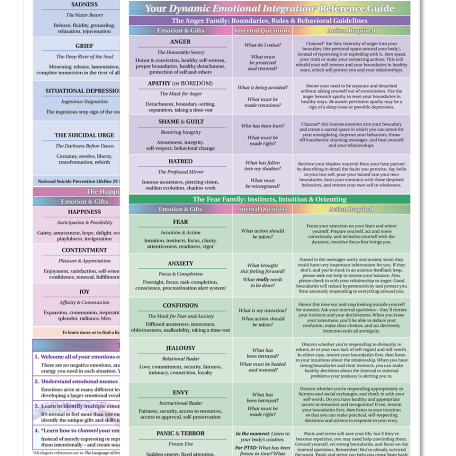
Yesterday, we looked at the connection between hatred, disgust, and rage. Rage is the aggressive aspect of hatred that can make you obsess over your hate targets and project all sorts of troubling material onto them. The fascinating thing about hatred is that you actually choose your hate targets not simply because they’re odious, but because they’re specifically odious in ways that cause specific, shadow-driven ragequakes inside you. Yes, I made that word up, but it feels quite apropos.
Let me take a giant step back today and say that projecting your shadow material onto other people is a common practice – and it’s not always horrific. Projection isn’t a terrible thing – it’s a human thing. We all project our shadow material, because we usually can’t work with it in straightforward ways (if we could, it wouldn’t be called the shadow, would it?). In fact, many of us project our “good” shadow material onto others just as frequently as we project our “bad” material.
For instance, when we admire famous people, we often project our best selves onto them – we let them hold our talent, our courage, our beauty, our prowess, and our brilliance (these traits are suppressed into the shadow just as often as our more troubling traits are). This projection process is often useful, because most of us can’t just say (for instance), “My family raised me to be focused on business administration, but I’ll just ignore that and become an artist.” No, we may need to idolize artists in order to make room for our own artistic nature. We may even attach ourselves to certain artists (as if they personified art) in a form of shadow projection known as adoration.

Psychoanalyst Carl Jung, 1875- 1961
Psychoanalyst Carl Jung worked on the concept of the human shadow, and he pointed out that projection is sometimes the only way we can become aware of our shadow material – he even went so far as to say that projection is sometimes the only thing that will get us out of our parent’s houses and into the world. So adoring someone else’s talent can be a safe way to move toward our own.
However, you’ll notice that strong adoration often morphs into disappointment when our adored person acts like a regular schmoe and not a magical being. This is the point when the projection slips, and if we realize what’s happening, we can let go of our projections, shake off the adoration, discover our own talents, and begin to live our own authentic lives.
Unfortunately, many of us don’t figure this out. We remain attached to our adoration targets, and try to change them back into that shining, perfect vision (or we might fiercely defend them and ourselves from the truth of their fallible ordinariness) – which launches us on a roller-coaster ride with them. When we find ways to reattach our projections, everything is peachy, but if they slip, we have to start all over again. It’s an unstable attachment that can seesaw back and forth between infatuation and disillusionment.
In many cases, this sort of adoration will even drop into hatred – into a fierce and shadowy attachment (think of stalkers, internet trolls, and crazed fans and you’ll get the picture). This intense form of adoration, then, helps us understand what hatred is all about.
Hatred is a twisted form of adoration. Hatred is the underside of adoration – where the intensity, the shadow projection, and the enmeshment are identical in intensity, but different only in the material being projected and the emotions being directed at the targets.
In the excellent shadow books of Robert Bly, Robert Johnson, and Connie Zweig, each author points out that we can easily find our shadowy, unlived material by closely observing the people we attach ourselves to through adoration or hatred.
If people live out the strengths and talents we suppress, we usually attach to them through adoration, idolization, or infatuation. If they live out our unwanted or disowned aspects, we usually attach to them through hatred, contempt, or resentment.

But in either case, whether we hate our targets or adore them, we’re attaching ourselves in an obsessive way and asking our targets to live out our repressed, ignored, shunned, or unlived shadow material.
Most of us can understand the enmeshments we create with our idols and our adoration targets, but when we flat-out hate people, we’re usually not aware of the strong and enmeshed attachments we create. Even hearing about it gives us the willies.
Yet these are the facts: If we dislike someone, we can walk away; if we fear someone, we can run away; but when we hate someone, we do neither of these things. When we express our hatred, we attach ourselves to our hate targets with an obsessive passion.
Tracking hatred in the brain
This connection between hatred and adoration (also called romantic love) is a concept that comes to us from art, poetry, and depth psychology, but the connection has also been found in our neurology.
Continue Reading …
Again, hatred is not mere dislike, which goes away when you separate yourself from people who behave badly — and it isn’t fear, which will recede when you get away from a frightening situation.

In my early teens, I read a popular self-help book that branded guilt and shame as “useless” emotions. The book presented the idea that we’re all perfect, and therefore shouldn’t ever be guilt-ridden or ashamed of anything we do. That idea seemed very strange to me, so I went to the dictionary and looked up guiltless and shameless and found that neither state was anything to celebrate.