Emotion Cards!

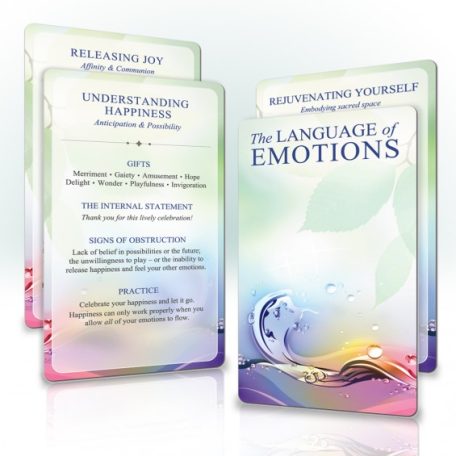
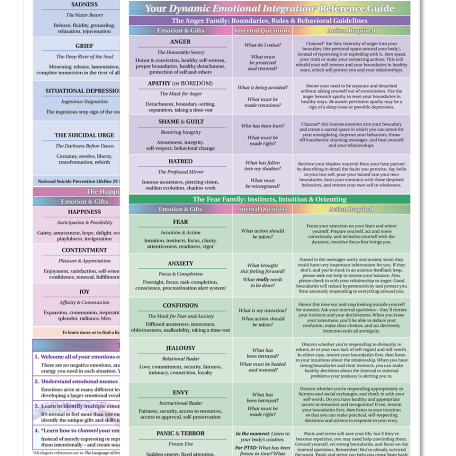
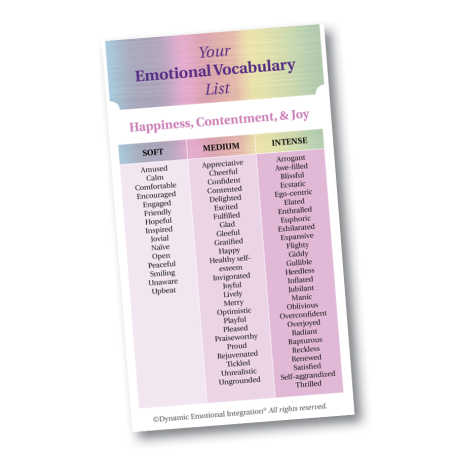
New! Language of Emotions cards to help you increase your emotional awareness and empathy, anytime and anywhere!

Learn More »

Speaking the language of emotions …

Why did you believe in the end of the world?

May 20th, 2011 | Comments (6)

I’ve been thinking — or more honestly, feeling — a great deal about this weekend’s purported Judgment Day, when there will supposedly be huge, planet-wide earthquakes, a rapture into heaven for 200 million true believers, and the beginning of the end of the world. The Apocalypse, Armageddon, Judgment Day.

Of course, none of that will happen. It never happens. Hundreds and thousands of Judgment Days, Armageddons, cataclysms, end times, and planet-wide disasters have been prophesied for centuries, but none of them has ever come to pass. For instance, just two months ago, an astrologer predicted that worldwide catastrophes would be set in motion by the Supermoon, and of course, that didn’t happen. And come Sunday morning, we’ll add yet another failed Judgment Day to this endless list.

Yet there’s something much more important than just another failed prophecy — and that’s the people who believe in it. Right now, these people are praying hard — for themselves, certainly, but also for you and me. They’re worried about us, and most of them don’t want us to suffer.

But come Sunday morning, we’ll have yet another devastated group of people who were promised an end to their suffering, a victorious place in the afterlife, and a reward for their faith and diligence. These people are what interest me (far more than failed prophecies do), because I care about their welfare — and because I can empathize with them.

Preparing for the cataclysm

I grew up as an agnostic atheist, but when I was ten years old, my mom discovered a group that believed in all sorts of fascinating paranormal things like reincarnation, spirit guides, magical healing diets, karma, positive affirmations that could bring you whatever you wanted, and psychic powers. It was a blast at first, and I really enjoyed the things I learned in that group.

However, many of the group members also believed in a New Age prophecy about a worldwide cataclysm, where — due primarily to the imbalances caused by human greed, callousness, and a lack of spirituality — the poles of the Earth would shift, massive earthquakes and volcanoes would be activated, and many land masses would be destroyed or deluged with water. In essence, the Earth was going to shake us humans off her back.

It was going to be the end of the world as we knew it, and it was supposed to happen at the end of the Mayan calendar, first in the late 1970s, and when that didn’t happen, in 2003 or 2004, depending on whom you asked. Most notably, California (where our group was based) was supposed to crack off and sink into the ocean.

photo of nordstrom's piano playerI’m not sure why, but the cataclysm never felt plausible to me. It just seemed preposterous somehow, and I sort of ignored it. I remember joking that if it did happen, I would be on a small floating piece of destroyed California, which would contain a fully-stocked Nordstrom’s department store (this was my idea of luxury at the time. I mean, come on — a grand piano in the lobby of a department store? That’s mad swanky.) People in the group thought I was too young and too silly to understand the importance of the cataclysm. Perhaps they were right.

I remember some people in the group who left their beloved California for many years, because they were afraid of the cataclysm. Of course, the cataclysm never happened, but those people who left California — I think about them a great deal. How do they feel now, looking back? Do they understand more about the world and the way these prophecies hook powerfully into very specific psychosocial and emotional needs, or are they now preparing for the updated 2012 version of their cataclysm?

Continue Reading ...

The Language of Emotions wins!

May 12th, 2011 | Comments (8)

Wow! Silver and Gold!

(May 12, 2011 – Boulder, Colo.) Sounds True is proud to announce that author Karla McLaren has won two awards for her 2010 book, The Language of Emotions: What Your Feelings are Trying to Tell You (Sounds True, June 20100. The awards include:
 
 
Gold medal for The Language of Emotions 2010 Gold Medal from the Independent Publisher Book Awards (in Self Help)

The Independent Publisher Book Awards recognizes the thousands of exemplary independent, university, and self-published titles produced each year, and rewards those who exhibit the courage, innovation, and creativity to bring about change in the world of publishing. In 2010, 3,907 entries from nine countries competed; 346 medals were awarded.


Silver medal for The Language of Emotions 2010 Silver Medal from the Nautilus Awards (in Personal Growth/Self-Help/Psychology)

The Nautilus Awards recognizes distinguished literary titles that promote conscious living, high-level wellness, spiritual growth, green values, responsible leadership, and positive social change. Award-winning titles stimulate the imagination and offer the reader new possibilities for a better life and a better world.


The Language of Emotions is the first book to explain all of the emotions in functional, everyday contexts. Each emotion gets its own chapter that explores what it’s for, why it arises (and in what forms), how it’s connected to your other emotions, and how to work with it in yourself and others,” says Karla McLaren.

Emotions—especially the dark and dishonored ones—hold a tremendous amount of energy. We’ve all seen what happens when we repress or blindly express them. In The Language of Emotions, Karla McLaren shows you how to meet your emotions and receive their life-saving wisdom to safely move toward resolution and equilibrium. Through experiential exercises covering a full spectrum of feelings from anger, fear, and shame to jealousy, grief, joy, and more, you’ll discover how to work with your own and others’ emotions with fluency and expertise. This book is a much-needed resource filled with revolutionary teachings and breakthrough skills for cultivating a new and empowering relationship with your feeling states through The Language of Emotions: What Your Feelings are Trying to Tell You.

Continue Reading ...

Emotions: Action-requiring neurological programs

April 16th, 2011 | Comments (9)

In my previous post, where I asked you to tell me what you’d like to learn in this year’s online Language of Emotions course, we got a wonderful set of responses. Thanks! I’m already creating a group of learning modules based on your feedback. Thanks everybody!

cover of Self Comes to MindAs I pondered your responses and requests, I kept being reminded of things I had just read in Antonio Damasio’s book, Self Comes to Mind: Constructing the Conscious Brain. It’s a good, though quite involved read, in which Damasio is laying out some theories of consciousness, based on his work as a neuroscientist. How does a brain create a mind? How does the mind create a self? What are the connections between wakefulness, consciousness, mind, and self? Can you be awake but not conscious? (Yes, for instance, in epileptic “absence” seizures.)

Interestingly, Damasio puts forth the hypothesis that true self-aware and other-aware consciousness cannot occur without emotions. Wow, I don’t know about you, but when I was growing up in the New Age, emotions were seen as a hindrance to consciousness — because emotions were allegedly “lower” than intellectual or spiritual ideas. I fell for that idea as a pre-teen, but I quickly saw that the idea was deeply flawed. It’s wonderful, after a lifetime of identifying the positive purposes of emotions on my own, to read all of the new research about emotions and their importance to memory, learning, thinking, decision making, and now consciousness and selfhood (and, of course, intellectual and spiritual ideas) … wow.

I saw clearly throughout my time in the New Age that denying emotions (or treating them as problematic) meant that people didn’t learn much about them (except that they were bad). People around me tried to live above, in spite of, and without emotions so that they could be more spiritual or more clear, but their efforts didn’t bear fruit. In theory, living without emotions might seem at first glance to be an interesting idea, but in reality (where emotions are integral to thinking, learning, socialization, memory, and consciousness) trying to live without emotions is just silly talk. However, I’m grateful for that silly talk, because it provided me a wonderful living laboratory for my early research into emotions.

Continue Reading ...

Let’s get our learn on!

April 4th, 2011 | Comments (36)

Cover of The Language of EmotionsAs a “do-it-aheader,” I’m preparing the curriculum for my Language of Emotions 8-week online course that starts on September 28th.

This class will be provided through Sounds True’s online architecture, and it will have video, audio, text, an online forum, two live sessions for direct teaching and Q&A, and a number of downloadable learning modules. To give you an idea of the process, here’s a sample of a course that was done last year with trauma-healing expert Peter Levine.

I’m taking three of Sounds True’s classes right now so that I can take the online infrastructure out for a spin. It’s fun! I think we’ll be able to create a really interactive and informative way to explore empathy and emotions in a community forum. Yeeha!

Here’s my question for you as I prepare the course materials: As a reader, what would you want to focus on in an online class? What specific areas are of interest to you, and what would you want to learn?

Thanks for your input. I appreciate you!

Continue Reading ...

Protecting yourself from emotional abuse

March 21st, 2011 | Comments (22)

Whew! The earthquake and tsunami in Japan, the seemingly endless turmoil in the Middle East and Africa, the financial crisis and the economic downturn it caused, and over the weekend, the Supermoon? That’s a lot to take in. Even without any media jacking you up, it’s a lot to take in. So here’s my suggestion: Be very mindful about what else you take in.

In Buddhism, there’s a saying: Suffering is discomfort multiplied by resistance, which tells us that if we can focus on our discomfort in a healthy way, instead of jacking ourselves up about it or making it into a melodrama, we can avoid suffering (I don’t think the Buddha ever used the phrase “jacking up,” but you get the point). Notice that the Buddha makes a distinction between discomfort and suffering. Discomfort, as we all know, is an expected part of life. There will be trouble, and loss, and pain; there will be discomfort. That’s not negotiable. But what is negotiable is how we manage our emotions and our behaviors in the face of discomfort.

As we face the serious discomforts of 9.0 earthquakes and tsunamis that travel 6 miles inland; the damage to Japanese nuclear plants; the still-unaddressed earthquake damage in Haiti; the tragic parade of violent dictators; the loss of financial security and stability; the widening chasm between political and ideological groups; and the resurgence of multiple forms of intolerance and bigotry, it is a very easy thing to tumble downward into suffering. Because really, who wouldn’t resist all of this discomfort?

But let’s turn toward suffering and ask ourselves what it is, really? To my eye, suffering is an emotional state, or to be more precise, it’s a series of intertwined emotions such as depression and despair, anger and rage, fear and anxiety, dread and panic, and so forth. For each of us, suffering involves different emotions and different mixtures of emotion, but suffering seems to require that we add something extra to the discomfort that is already present.

Ape considering the suggestionMindfulness practices can give us options when we head downhill toward suffering. The emotional mindfulness practice in The Language of Emotions helps you turn toward your emotions, identify them, and then take the actions that best complete those emotions (emotions are action-requiring neurological programs) so that your emotions will abate and you can alleviate your suffering. The discomfort will still be there, but you’ll be in a better position to deal with that discomfort — and most importantly, you’ll be better able to support others who are in pain. Mindfulness can help you avoid the paralyzing emotional badlands of suffering.

Continue Reading ...